Beyond Recognition
This project explores how pseudo-haptics can influence behavior before users consciously notice any change.
- Year
- 2025
- Duration
- 2 months
- Tools
- JavaScript, HTML/CSS
- Type
- Individual
- Summary
- This project explores how interaction can be guided through pseudo-haptics (using visual feedback alone to create a sense of resistance) showing that users can feel and respond to changes in control before they are consciously aware of them.
Intro
Pseudo-haptics relies on a mismatch between what the body does and what is seen on screen. When input and visual response do not align, the brain interprets this discrepancy as a physical sensation such as resistance, weight, or texture.
This project investigates how far that mechanism can be pushed without physical hardware, and without relying on familiar references.
Starting point
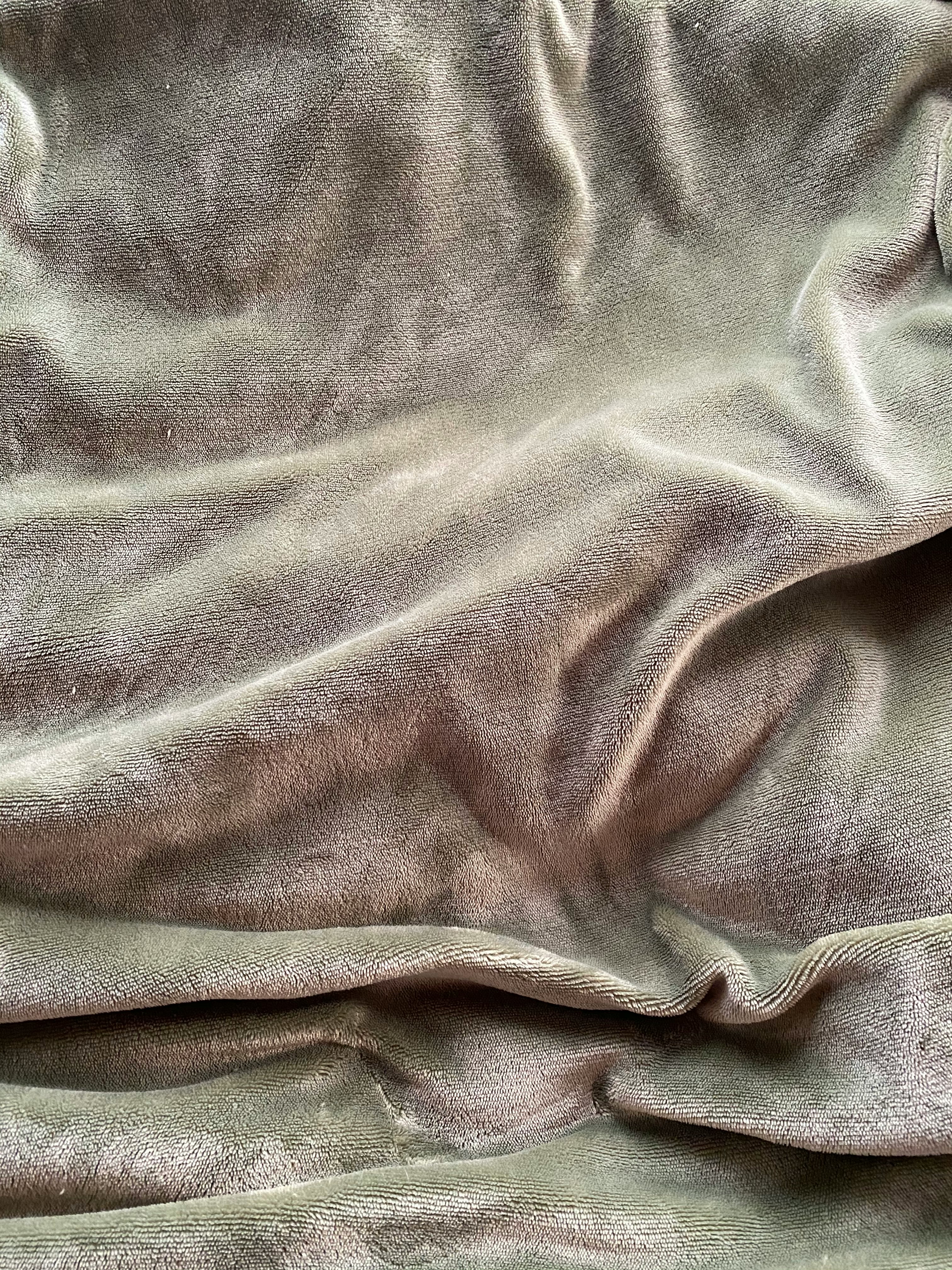
The initial focus was on dynamic textures, surfaces that change depending on how they are interacted with. Early experiments explored directional variation, inspired by materials like velvet or wood, where movement in one direction produces a different sensation than the other.
These interactions worked in creating feelings of textures. However, they depended on users recognizing patterns that resembled known materials. The experience was not purely perceptual, it was mediated by prior knowledge and expectation.
This led to a shift in focus. Instead of creating interactions that users interpret through analogy, the goal became to create sensations that are directly perceived.

Concept
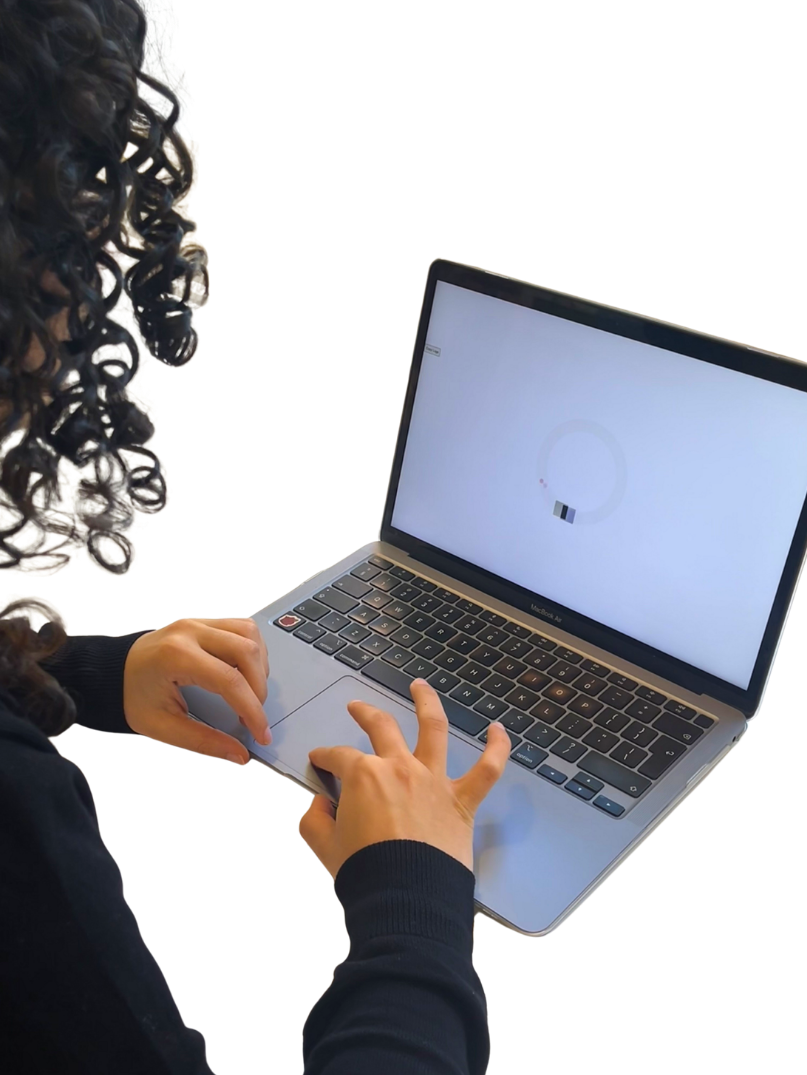
A minimal interaction was designed where users drag a square along a circular path. As they move, the system gradually alters the relationship between their input and the visual response. The motion becomes increasingly difficult to maintain, without any visible indication of why.
The interaction was inspired by the process of whisking egg whites. As the mixture thickens, resistance increases gradually, and movement requires more effort. This provided a model for a system where resistance develops over time based on user input without discrete steps.

User response
Across multiple iterations of testings, users consistently adapted their behavior (slowing down their movements to accommodate for the square slowing down) before they reported noticing any change.
Their movements changed in response to resistance they could not yet describe. Even as the system became more dynamic, users remained coupled to it, continuously responding to changes in real time.
Insight
The project shows that interaction can influence behavior without requiring conscious recognition. Users respond to changes before they are aware of them, adjusting their actions in ways they cannot fully articulate.
This introduces a more ambiguous territory: interaction design not only communicates with users, but can also steer their behavior beneath the level of awareness.
Outcome
Rather than treating pseudo-haptics as a way to simulate materials, this project positions it as a tool for shaping interaction through subtle modulation of control.
It suggests an alternative approach to interface design where feedback is not presented as information, but embedded in the interaction itself.
In this model, users are not explicitly instructed or informed. They are guided through responses they do not fully perceive, but nonetheless follow.