Touch the Poetry
A haptic augmented book that turns verse into vibration
- Year
- 2024
- Duration
- 8 weeks
- Tools
- C++, Arduino Nano, Adafruit, Haptic Actuators
- Type
- Individual
- Summary
- This project combines haptic feedback with poetry, allowing readers to feel the emotions and rhythms of poems through touch.
Introduction
This project explores how haptic feedback can be used not just as a functional tool, but as an emotional medium. Haptics are most commonly experienced through phone notifications or alerts which are brief, utilitarian signals designed to inform rather than express. But touch is inherently intimate. To engage with haptics, you quite literally place your body into the interaction. There is a vulnerability in that, and this project treats that vulnerability as a starting point.
That perspective led me to think about poetry. Poetry is often associated with static formats of pages of text, structured stanzas, a largely visual experience. At the same time, forms like spoken word and slam poetry have shown that poetry becomes more immediate and affective when performed. The voice adds rhythm, emphasis, and physical vibration. In that sense, spoken poetry is already a multisensory experience.
Concept
This project draws a parallel between vocal vibration and haptic vibration. Both operate through rhythm and modulation over time. When we listen to a poem, we pick up on pacing, stress, and tone. Similarly, haptic feedback can encode temporal patterns that are felt rather than heard. In some ways, touch can even surpass sound, particularly in how we perceive texture. That idea of “texture” exists in poetry as well, not physically but metaphorically, through language, rhythm, and emotional density.
Design
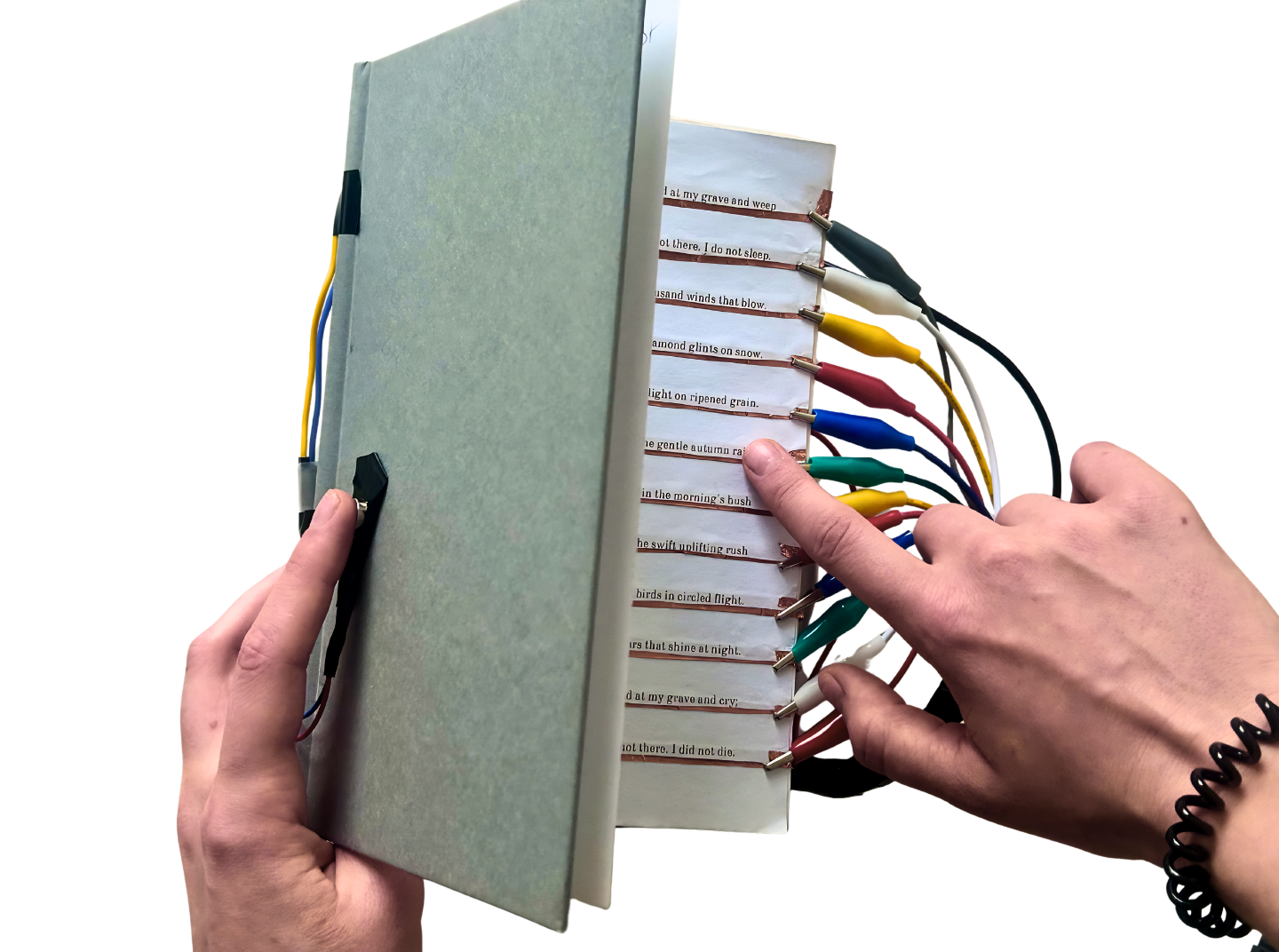
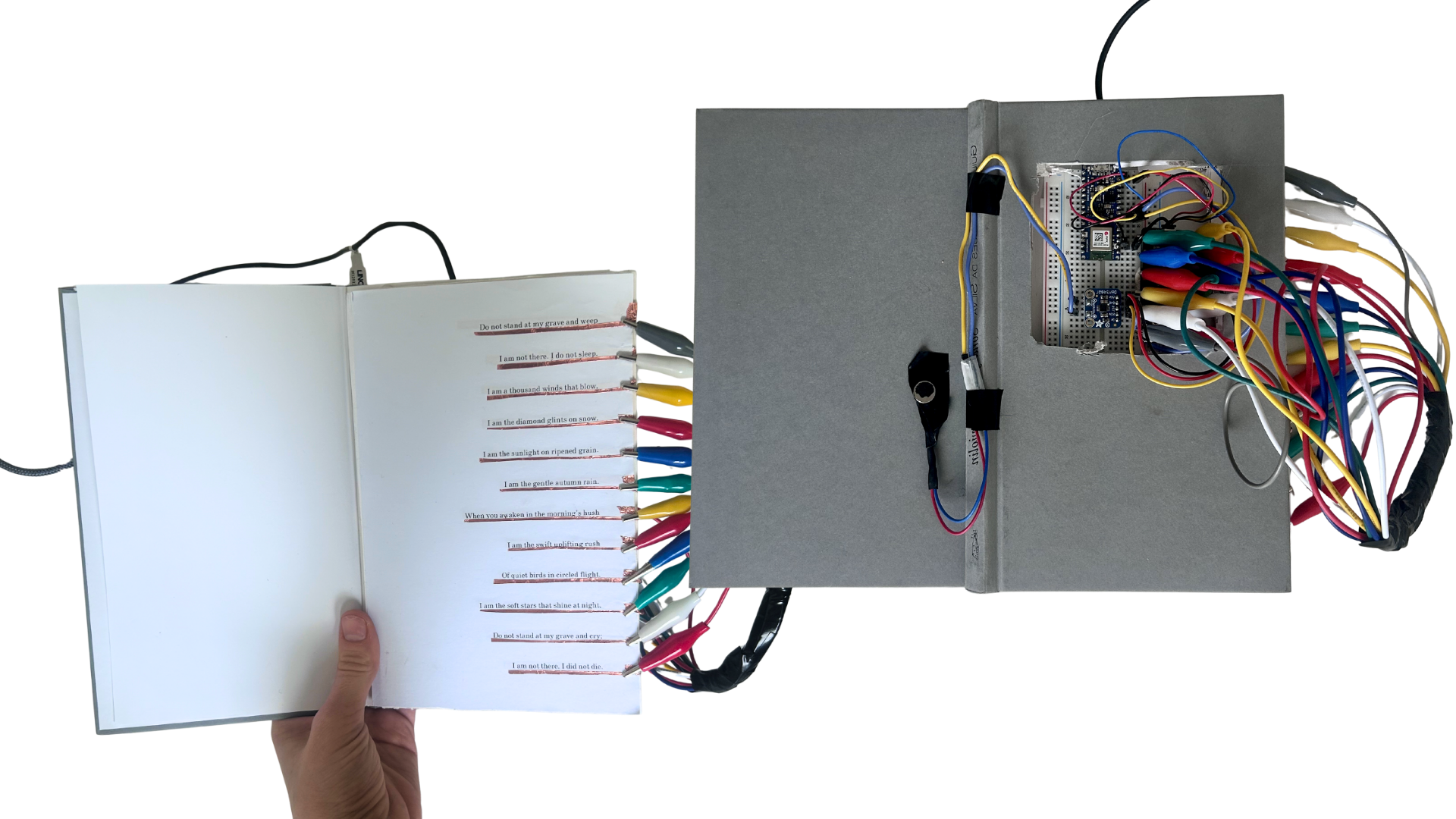
The goal was not to replace reading, but to augment it. That is why I chose to work with the familiar and traditional format of a physical poetry book. A small vibration motor is placed on the back, where the reader’s finger naturally rests. As the reader traces the verse, vibrations are triggered in sync with the text. The interaction is intentionally minimal. Ideally, the reader does not think about the technology at all, but simply experiences the poem in a slightly expanded way.
The vibration patterns themselves are interpretive. They reflect my own reading of the poem - how I perceive rhythm, emphasis, and emotional shifts. This is not meant to be a universal or “correct” interpretation. In the same way that hearing someone recite a poem can challenge or reshape your understanding, the haptic layer introduces another perspective. It may align with the reader’s interpretation or diverge from it, but in both cases it encourages reflection.
Process
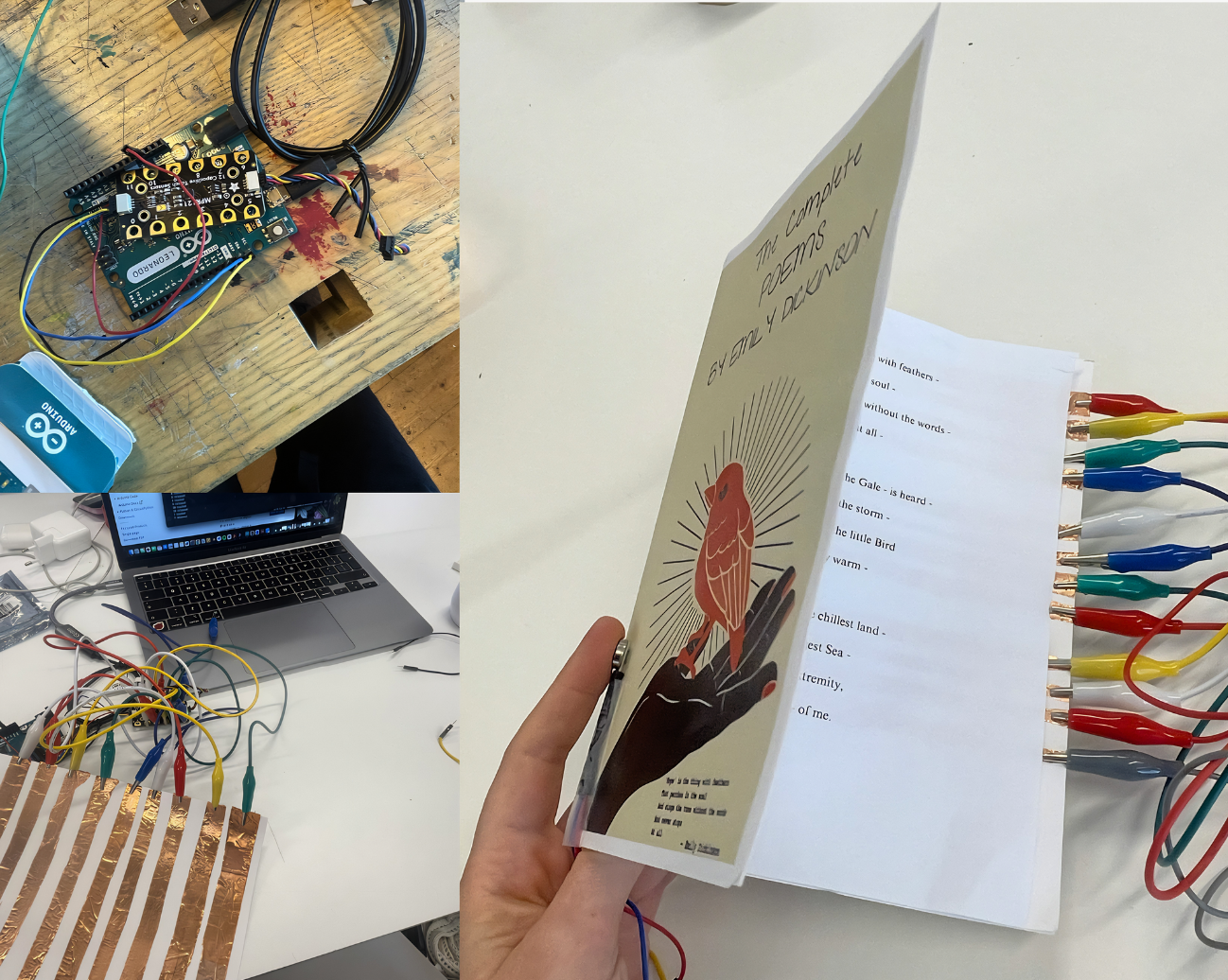
Prototyping focused primarily on placement and subtlety. Different configurations were tested to find a balance where the feedback was perceptible but not distracting. The final prototype is visibly rough (with exposed cables) but functionally it achieves the intended interaction.
User testing showed that participants experienced the poem differently when touch was introduced. Several described it as “feeling” the poem rather than just reading it.
Outcome
This project positions haptics as a potential extension of poetic expression. It suggests that poetry does not need to remain confined to text or sound, but can expand into tactile experience, adding another layer through which meaning can be sensed and interpreted.